Let me guess. You opened your Kindle, stared at the hundreds of books living there rent-free, scrolled for fifteen minutes, and still could not decide what to read.
Meanwhile, you somehow had enough energy to check social media, reorganize your pillows, refill your drink, and investigate what everybody else was reading.
Bestie, the problem is not that you have nothing to read.
The problem is that you do not know what kind of emotional foolishness you are in the mood for today.
Do you want two people arguing for 200 pages before finally admitting that all that irritation is actually attraction? Are you craving longtime friends who are deeply in love but apparently the last two people on Earth to notice? Maybe you want a hero who falls first, falls harder, and spends the rest of the book looking at the heroine like she personally invented oxygen.
That is where romance tropes come in.
A romance trope is a familiar relationship dynamic, situation, or story setup that helps us understand what type of romantic journey we are about to experience. Tropes give readers a shared language for saying things like:
“I want tension.”
“I want yearning.”
“I want soft love.”
“I want drama, but not so much drama that I have to close the book and stare at the wall.”
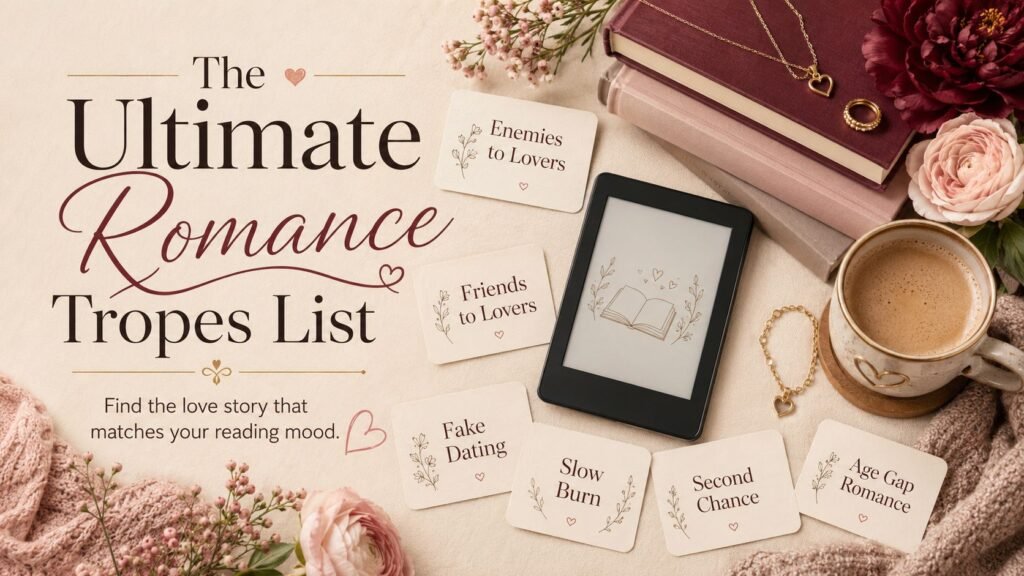
This ultimate romance tropes list will help you understand some of the most popular setups in romance books, figure out which ones match your reading mood, and possibly explain why you keep adding the same type of love story to your TBR under completely different covers.
No judgment. We all have a pattern.
What Is a Romance Trope?
A romance trope is a recognizable story pattern or relationship setup that appears across different books.
For example:
Two enemies fall in love.
Best friends finally admit they want more.
A fake relationship becomes suspiciously real.
Former lovers reconnect years after their breakup.
Two people are forced to share one bed because apparently every hotel in fiction has exactly one available room.
The trope gives us the basic setup, but it does not tell us exactly how the story will unfold. Two authors can write an enemies-to-lovers romance and create completely different books.
One might give us workplace rivals exchanging sarcastic emails.
Another might give us two powerful families at war.
A third might give us neighbors arguing over a parking space with enough sexual tension to power the entire apartment building.
Same trope. Completely different experience.
Romance Tropes Are Not Automatically Clichés
People sometimes use the words “trope” and “cliché” as though they mean the same thing, but they do not.
A trope is simply a familiar storytelling element.
A cliché is what happens when that familiar element feels predictable, underdeveloped, or copied without adding anything fresh.
A well-written trope makes you think, “I know where this is going, and I cannot wait to get there.”
A tired cliché makes you think, “Oh. We are doing this again.”
Romance readers are not necessarily looking to be surprised by every part of the relationship. Sometimes we want the comfort of knowing the couple will eventually get together. The excitement comes from discovering how they get there, what tries to keep them apart, and which one of them will finally stop acting emotionally unavailable first.
Can One Book Have More Than One Trope?
Absolutely.
Most romance books combine several tropes because one flavor of chaos is rarely enough.
A book could include:
- Workplace rivals
- Forced proximity
- Grumpy and sunshine
- Slow burn
- He falls first
- Only one bed
That is not a romance novel. That is a full emotional obstacle course.
Usually, one trope acts as the main setup while the others add tension, personality, or emotional depth. Learning to recognize these combinations can make it much easier to find books you will enjoy.

Why Do Romance Readers Love Tropes So Much?
Tropes help us choose books based on the experience we want.
Sometimes you want a story that feels warm and comforting. Sometimes you want emotional tension so intense that one lingering glance becomes a major plot development. Sometimes you want two grown adults to communicate clearly.
And sometimes you want them to make the wrong decision repeatedly because you came for the mess.
Tropes also help readers:
- Find books with their favorite relationship dynamics
- Avoid setups they do not enjoy
- Choose stories that match their mood
- Describe their reading preferences
- Discover new authors through familiar story patterns
You may not always know the title of your next read, but you probably know whether you want tenderness, tension, yearning, chaos, or somebody’s fine brother walking into the room at the worst possible time.
Let us get into the tropes.
Relationship-Based Romance Tropes
Enemies to Lovers
Enemies to lovers begins with two people who dislike, oppose, or compete with each other before developing romantic feelings.
And when I say dislike, I do not mean one character forgot to hold the elevator.
I mean real tension.
They argue. They challenge each other. They may be competing for the same goal. They may have completely misunderstood each other. Either way, every conversation feels one sentence away from either a fight or a kiss.
Readers often love enemies to lovers because of the banter, emotional tension, and gradual shift from irritation to vulnerability.
The best versions make the romantic transformation believable. We need to see why their feelings change. One smoldering look cannot erase 150 pages of disrespect.
And let us be clear: entertaining rivalry is not the same as cruelty. There is a difference between “You are irritatingly talented” and “I have made your life miserable for three years.”
Rivals to Lovers
Rivals to lovers is enemies to lovers’ slightly more responsible cousin.
The characters are not necessarily enemies. They may simply be competing for the same promotion, award, client, championship, or community recognition.
They respect each other’s abilities, even if they would rather chew glass than admit it.
This trope works beautifully in workplace romances, sports romances, academic settings, and stories involving competing businesses.
Nothing creates tension quite like two ambitious people trying to outperform each other while noticing entirely too much about how the other one looks in professional attire.

Friends to Lovers
Friends to lovers features two people who already trust, support, and understand each other before their relationship becomes romantic.
The emotional foundation is already there. They know each other’s favorite snacks, worst habits, family drama, and embarrassing childhood stories.
Now they just need to realize that their friendship is not completely platonic.
Everybody around them usually knows.
The family knows.
The friend group knows.
The neighbor knows.
The barista they have spoken to twice knows.
But the two people actually involved? Clueless.
The tension often comes from fear. What happens if the relationship does not work? Will they lose the friendship too?
Friends to lovers is perfect for readers who enjoy emotional intimacy, familiar affection, and the realization that home may have been a person all along.
Yes, I know. That was soft. Stay focused.
Childhood Friends to Lovers
This version adds history, nostalgia, and possibly old family photos nobody wants displayed.
The characters grew up together, knew each other before adulthood complicated everything, and may have once made a childhood promise that becomes emotionally significant later.
Sometimes they remained close.
Sometimes they drifted apart.
Sometimes one of them returns home looking entirely too good for someone who used to eat glue beside them in elementary school.
Childhood friends to lovers often overlaps with returning home, second chance, and small-town romance.

Strangers to Lovers
Two people meet without an established history and build their relationship from the beginning.
This is the classic meet-cute territory.
They may meet at a coffee shop, on vacation, during a delayed flight, at a wedding, or while fighting over the last copy of a book.
In real life, arguing over merchandise is annoying. In romance, it could lead to marriage by chapter twenty-eight.
Strangers to lovers works well for readers who enjoy fresh starts, immediate chemistry, and the excitement of discovering someone new.
Best Friend’s Sibling
One character falls for their best friend’s sibling.
This is where loyalty, family boundaries, and years of hidden attraction all gather in one room and refuse to behave.
The romantic interest may have once been completely off-limits. Maybe the best friend warned everyone away. Maybe the characters secretly liked each other for years. Maybe one of them returns home and suddenly looks nothing like the annoying younger sibling everybody remembers.
The central conflict is usually not whether they are attracted to each other.
It is how long they can hide it before the best friend notices.
Spoiler: not long.
Sibling’s Best Friend
This trope flips the previous setup.
The love interest is the sibling’s best friend, which means the characters may have known each other for years without being allowed to explore their feelings.
The sibling is often convinced that their friend is unsuitable for reasons they are happy to explain loudly and repeatedly.
Naturally, this only makes the romance more tempting.
Age-Gap Romance
Age-gap romance features two adults with a noticeable difference in age who develop a romantic relationship.
Sometimes the older character is more established in their career, finances, or personal life. The younger character may be entering a new stage of adulthood, building a career, or simply living life with a different perspective.
And sometimes the age difference is barely relevant until a family member finds out and suddenly wants to organize a full community meeting.

Second Chances and Complicated History
Second-Chance Romance
Second-chance romance brings former lovers back together after a breakup, separation, or long period apart.
They already know what it feels like to love each other.
They also know exactly how badly they can hurt each other.
That history creates an emotional depth that a brand-new relationship does not have. There are memories, regrets, unresolved feelings, and possibly one breakup explanation that sounds suspiciously incomplete.
The best second-chance stories show that both characters have grown. Love alone may not have been enough the first time. They need maturity, honesty, and better communication.
And perhaps therapy. We support emotional resources in this reading lounge.
Lovers to Enemies to Lovers
These characters were once together, but something went very wrong.
Now the love has been buried beneath anger, betrayal, resentment, or one enormous misunderstanding that could have been solved with a five-minute conversation.
Unfortunately, romance characters do not always believe in asking direct questions.
The fun comes from slowly uncovering what happened, determining whether forgiveness is possible, and watching old feelings return despite everybody’s best efforts.
Rekindled First Love
There is something especially emotional about reconnecting with the first person you ever loved.
The characters may have separated because of distance, timing, family expectations, career goals, or youthful mistakes. When they meet again as adults, they have to decide whether the relationship belonged to the past or deserves a future.
The nostalgia can be powerful.
So can the shock of discovering your teenage crush has aged exceptionally well.
Marriage in Trouble
Marriage-in-trouble romance follows an established couple whose relationship is struggling.
This trope is not about two people meeting and falling in love. It is about two people deciding whether they can stay in love.
The conflict may involve emotional distance, career pressure, family responsibilities, broken trust, or years of avoiding necessary conversations.
When handled well, these stories can be deeply emotional because the couple is not building something from nothing. They are trying to rescue something they once believed would last forever.
Fake Relationships and Convenient Arrangements
Fake Dating
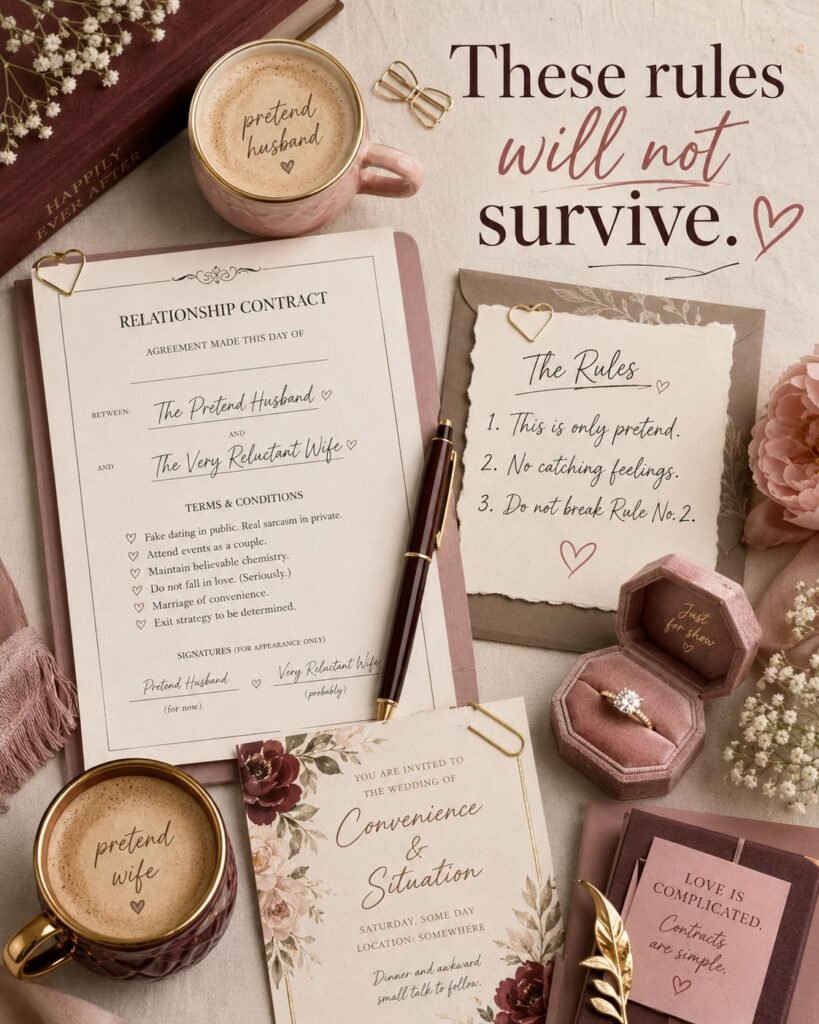
Now one of my personal favorites… Fake Dating. Fake dating starts when two people pretend to be in a relationship for practical reasons.
They may need a date for a wedding.
They may want to stop family members from asking intrusive questions.
One may need to improve their public image.
Someone may be trying to make an ex jealous, which is always a sensible and emotionally mature plan.
The couple creates rules.
They promise not to catch feelings.
They agree that everything is pretend.
Bestie, those rules will not survive.
Fake dating is popular because it gives readers romantic moments before the characters are willing to admit the romance is real. They hold hands for appearances. They practice kissing for “believability.” They become jealous for reasons they absolutely refuse to investigate.
We investigate them, though.
Marriage of Convenience
In a marriage-of-convenience story, the characters marry for practical reasons instead of love.
Maybe there is an inheritance condition.
Maybe the arrangement helps a business.
Maybe family expectations are involved.
Maybe one character needs stability or protection.
Whatever the reason, these two people enter the marriage believing emotions will remain outside the agreement.
Aww… that’s adorable.
Marriage of convenience gives us shared homes, accidental domestic intimacy, family gatherings, public affection, and the gradual realization that the arrangement no longer feels temporary.
Accidental Marriage
The characters get married unexpectedly, impulsively, or without fully understanding what they have done.
There may be a trip, a celebration, a questionable amount of champagne, and a legal document nobody remembers signing.
The next morning usually includes panic.
The rest of the book includes attraction, denial, and at least one person insisting they should get an annulment while making absolutely no effort to stay away from their new spouse.
Relationship Contract
The characters agree to a temporary romantic or physical arrangement with clearly defined rules.
There may be an expiration date.
There may be boundaries.
There may even be a written agreement.
Once again, the rules are decorative.
The romance begins when the arrangement stops feeling practical and starts feeling personal.
Proximity-Based Romance Tropes
Forced Proximity
Forced proximity places two characters in a situation where they have to spend time together.
They might be assigned to the same project.
They may be stranded during bad weather.
They may have to travel together.
One may need somewhere temporary to stay.
They may dislike each other, but now they cannot escape.
Forced proximity is effective because it removes distance. Characters who would normally avoid emotional conversations suddenly have nowhere to go.
They start noticing each other’s routines.
They see each other when tired, worried, unguarded, or wearing soft clothes.
Feelings begin forming.
Privacy begins disappearing.
We begin turning pages faster.
Only One Bed
Only one bed is forced proximity with a mattress and audacity.
Two characters arrive at their destination and discover there is only one bed.
Not one bed and a comfortable couch.
Not one bed and a rollaway.
Just one bed.
Hotels in romance novels are apparently suffering from a furniture shortage.
One character offers to sleep on the floor. The other insists that would be ridiculous. They place pillows between them… as though pillows have ever stopped a plot.
Then somebody wakes up touching somebody else.
Suddenly, nobody remembers why sharing the bed was supposed to be a problem.
Roommates to Lovers
Two people share a home and slowly develop feelings.
Roommates to lovers creates intimacy through ordinary life.
They cook together.
They argue about dishes.
They see each other wearing sleep clothes.
They notice who always replaces the toilet paper and who leaves exactly one spoonful of leftovers in the refrigerator.
Romance does not get more realistic than discovering you love someone despite their household habits.
Neighbors to Lovers
The characters live near each other and keep crossing paths.
They may meet through a noise complaint, a borrowed ingredient, a package delivered to the wrong apartment, or a neighborhood event neither one wanted to attend.
Neighbors to lovers works because connection develops naturally through repeated encounters.
It also creates the delicious inconvenience of having your romantic interest live close enough to notice when you are avoiding them.
Road-Trip Romance
Two characters travel together and develop a connection along the way.
There is limited space, changing scenery, unexpected delays, and nowhere to hide after saying something emotionally revealing.
Road-trip romance often overlaps with friends to lovers, rivals to lovers, or second chance.
There may also be terrible singing, questionable snacks, and an argument over directions.
That is intimacy.
Vacation Romance
A relationship begins while one or both characters are away from everyday life.
Vacation romances can feel freeing because the characters temporarily escape their normal routines, responsibilities, and expectations.
The complication comes later.
Was this connection real, or did it only work because they were somewhere beautiful with no laundry to fold?
Personality and Character-Dynamic Tropes
Grumpy/Sunshine
One character is serious, reserved, or easily irritated.
The other is cheerful, warm, and determined to speak before the grumpy character has had coffee.
Naturally, they fall in love.
Grumpy/Sunshine works because the personalities balance each other. The sunshine character brings warmth into the grumpy character’s guarded world. The grumpy character may offer steadiness, loyalty, and acts of care they pretend mean nothing.
The best part is watching the grumpy one become soft for exactly one person.
They still dislike everybody else.
As they should.
Opposites Attract
Two people with different personalities, lifestyles, backgrounds, or interests develop a relationship.
One may plan every detail.
The other may believe plans are merely suggestions.
One may enjoy quiet evenings.
The other may know everyone at every event.
Opposites-attract romance works when the differences help both characters grow. It becomes less convincing when they disagree about every major life value and the book expects chemistry to solve it.
Attraction is powerful, but it cannot decide where you will live, whether you want children, or who keeps spending the grocery money on decorative pillows.
Cinnamon Roll Hero
A cinnamon roll hero is sweet, emotionally supportive, respectful, and kind.
He may also be confident, protective, successful, and attractive enough to cause public confusion.
Kindness does not make a romantic lead boring.
Sometimes the fantasy is not a dangerous man with questionable morals.
Sometimes the fantasy is a man who communicates, remembers important details, and does not disappear for three chapters because he is afraid of feelings.
Revolutionary.
Morally Gray Love Interest
A morally gray love interest makes complicated choices and may operate outside conventional ideas of right and wrong.
This character is not necessarily a villain, but they are not applying for sainthood either.
Readers may enjoy the intensity and selective loyalty that often come with this trope.
They may be ruthless with everyone else and unbelievably gentle with the person they love.
Is that healthy in real life? I mean seriously, we’re discussing book worlds right now. Stay with me.
Protective Love Interest
A protective character shows love through care, support, and a strong desire to keep the other person safe.
Protection can be romantic when it respects the other character’s choices.
It becomes controlling when one person removes the other’s agency and calls it love.
We enjoy “I have your back.”
We are less excited about “I made every decision for you because apparently you are decorative.”
Unhinged MMC (i.e. “Mr. Burn the City Down”)
This is the dramatic, high-stakes version of the protective-love-interest trope.
The romantic lead may be calm about almost everything until someone threatens the person they love.
Then suddenly the atmosphere changes, the soundtrack becomes ominous, and somebody has made a very poor life choice.
This trope often appears in romantic suspense, dark romance, fantasy romance, and stories featuring powerful or morally gray characters (i.e. Urban Fiction).
Pacing and Emotional-Build Tropes
Slow Burn
Slow-burn romance develops gradually.
And I mean gradually.
There may be 300 pages of lingering glances, almost-confessions, emotional restraint, and two people finding increasingly creative ways not to admit they are in love.
A hand touch becomes an event.
A hug requires recovery time.
The first kiss may not arrive until you have started checking the page count.
Slow burn is perfect for readers who enjoy tension, longing, and a strong emotional foundation.
The payoff must be worth the wait, though. After all that yearning, the couple cannot give us one rushed conversation and expect us to be satisfied.
We have invested hours.
We require emotional dividends.

Instalove
The characters form an intense romantic connection very quickly.
Some readers adore instalove because it delivers immediate emotion and certainty. Others need more time to believe the relationship.
Neither preference is wrong.
Sometimes you want a carefully developed relationship.
Sometimes you want two people to meet on Tuesday and start discussing forever by Friday.
Black Romance and Urban Fiction contains multitudes.
Instalust
The physical attraction appears immediately, while emotional intimacy develops later.
The characters may believe the relationship is purely physical.
We know better.
They know better too, but denial is part of the experience.
He Falls First
The MMC realizes his feelings before the FMC.
He may try to hide it, accept it quietly, or immediately begin acting like a devoted husband even though nobody has officially asked him to do that.
This trope is especially satisfying when the FMC is cautious, busy, or completely unaware that this man has already rearranged his emotional life around her.

She Falls First
The FMC recognizes her feelings first.
This can create emotional vulnerability, especially when she is unsure whether the love interest feels the same.
A satisfying version gives her emotional dignity. She can be in love without spending the entire book begging someone to choose her.
We support FMC’s with feelings and standards.
Workplace and Career Romance Tropes
Workplace Romance
The couple meets or becomes romantically involved through work.
They may be coworkers, collaborators, business partners, or professionals in related fields.
Workplace romance creates easy opportunities for repeated interaction, competition, late-night projects, and trying to remain professional while noticing entirely too much.
Nothing says “professional environment” like standing too close near the copy machine.
Office Rivals
Two coworkers compete for the same opportunity while developing feelings.
This combines workplace romance with rivals to lovers, which means ambition and attraction are constantly fighting for attention.
They want the promotion.
They also want each other.
Human resources would like a meeting.
Boss and Employee
A romance develops between two people with different levels of workplace power.
This trope can create strong tension, but it works best when the story thoughtfully handles consent, career consequences, and the power imbalance.
The romantic fantasy should not require one character to risk their income every time the other one has a feeling.
Celebrity and Regular Person
A famous person falls for someone outside their public world.
The regular person may initially be unimpressed, unaware of the celebrity’s identity, or actively resistant to the attention.
The story often explores privacy, public scrutiny, lifestyle differences, and whether the relationship can exist outside the spotlight.
Also, there is usually an event where the regular person gets styled for a red carpet and the celebrity forgets how speaking works.
We respect tradition.
Sports Romance
One or both characters are involved in competitive sports.
This could include professional athletes, coaches, journalists, trainers, team staff, or rival competitors.
Readers may enjoy the discipline, public pressure, team dynamics, and physical confidence that often come with these stories.
The athlete is frequently very committed to training until one person appears and completely disrupts the schedule.
Billionaire Romance
One character has extreme wealth, professional influence, or access to luxury.
Private jets may appear.
Entire buildings may be owned.
Restaurants may close so the couple can have dinner alone.
Meanwhile, the rest of us are wondering whether parking is validated.
Billionaire romance often explores power, trust, family expectations, and the fear that money affects every relationship.
Family and Community Tropes
Single-Parent Romance
One or both characters are raising children while navigating a new relationship.
These stories can explore dating with responsibilities, creating a blended family, and building trust beyond the central couple.
The love interest is not only entering a romance. They are entering an established family system.
And the child will usually ask the one question everybody has been avoiding.
Children in romance novels have no interest in subtlety.
Surprise Pregnancy
An unexpected pregnancy changes the relationship between the characters.
This trope can create emotional, practical, and family-related complications. Readers often have strong feelings about it, so check descriptions and reviews when this setup is not your preference.
Some readers love the forced teamwork and emotional growth.
Others see the words “surprise pregnancy” and exit the building.
Both responses are valid.
Secret Baby
One character discovers that a past relationship resulted in a child.
The story often focuses on trust, lost time, co-parenting, and whether the romantic relationship can be rebuilt.
This trope needs a convincing explanation for the secrecy. “I simply forgot to mention your entire child” will not carry the emotional weight required.
Found Family
Found family focuses on characters creating deep, supportive relationships outside their biological families.
The romance may develop within a close friend group, neighborhood, workplace, or chosen community.
This trope often provides warmth, humor, and side characters who will interfere in the couple’s relationship with love and absolutely no boundaries.
Small-Town Romance
The relationship unfolds in a close-knit community where everybody knows everybody.
There may be a family business, community festival, local gossip network, and one older woman who understands the entire plot before the main characters do.
Small-town romance often feels comforting because the community becomes part of the story.
It also means there is nowhere to hide after a public argument.
By breakfast, the entire town has opinions.
Returning Home
A character returns to their hometown after years away.
They may reconnect with family, rediscover their identity, take over a business, or encounter the person they never fully stopped loving.
This trope often combines nostalgia with personal growth.
The hometown may remember who the character used to be, while the romance helps reveal who they have become.
Secretive and High-Drama Tropes
Forbidden Romance
The characters face an outside rule or expectation that says they should not be together.
The obstacle may involve family conflict, professional boundaries, social expectations, competing loyalties, or community pressure.
Forbidden romance works because every interaction carries extra weight. The characters are not only deciding whether they want each other. They are deciding what they are willing to risk.
Secret Relationship
The couple is together but hides the relationship from other people.
This can create stolen moments, coded conversations, and tension around getting caught.
The secrecy may feel exciting at first.
Eventually, somebody gets tired of being introduced as “just a friend.”
As they should.
Hidden Identity
One character conceals an important part of who they are.
They may be famous, wealthy, professionally connected, or using an online identity the other character does not recognize.
The central issue is not always the secret itself. It is whether the relationship can survive the loss of trust once the truth comes out.
Love Triangle
One character has romantic feelings involving two possible partners and must eventually choose.
This creates tension, comparison, and a great deal of reader debate.
Some people love love triangles.
Other people spend the entire book yelling, “Choose the obvious person!”
The difficulty is that readers do not always agree on who the obvious person is.
Revenge Romance
One character begins the relationship as part of a revenge plan.
Naturally, genuine feelings develop, because nothing complicates revenge like emotional attachment.
The eventual reveal must carry real consequences. The hurt character deserves more than one apology in the rain and a dramatic facial expression.
Bodyguard Romance
One character is assigned to protect the other.
This creates forced proximity, high stakes, and a professional boundary that becomes increasingly difficult to maintain.
The bodyguard is usually serious, observant, and determined not to get emotionally involved.
That determination lasts approximately four chapters.
Multi-Partner and Nontraditional Relationship Tropes
Why Choose Romance
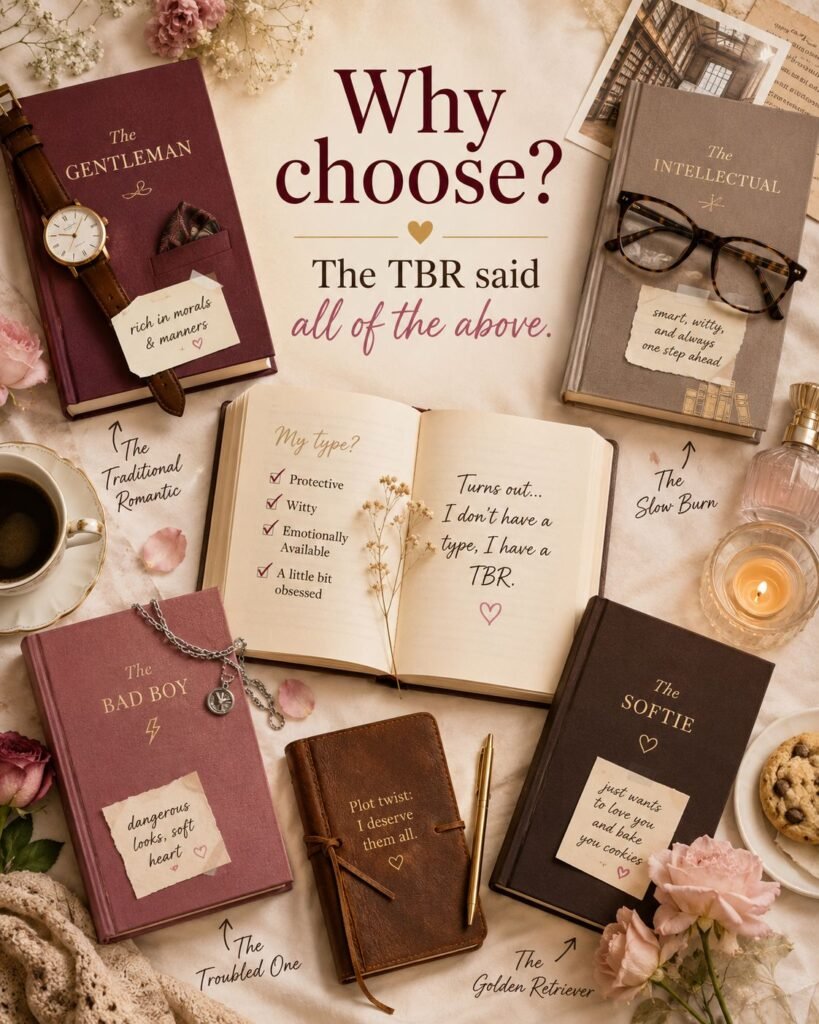
Why choose romance features one central character who develops a consensual romantic relationship with multiple partners and does not have to choose only one.
You may also see these books described as reverse harem romances, although many readers and authors prefer the term “why choose.”
This trope can include:
- Established groups
- Multiple partners meeting through the central character
- Different emotional dynamics within one relationship
- Fantasy, paranormal, contemporary, or suspense settings
The appeal is right there in the name.
Why choose?
The FMC has reviewed the options and selected all of the above.
Love Triangle vs. Why Choose
The simplest difference is this:
A love triangle usually ends with a choice.
Why choose romance says the choice is unnecessary.
Why Choose romance may explore several connected relationships rather than placing one character at the center of every romantic connection.
Setting-Based Romance Tropes
Big-City Romance
The relationship unfolds in an urban environment filled with busy careers, apartment living, nightlife, social events, and ambitious characters.
Big-city romance often creates a sense of possibility. Millions of people live nearby, yet these two keep crossing paths.
Sometimes the city feels exciting.
Sometimes it feels lonely.
The romance becomes the place where the characters finally feel seen.
Destination Romance
The couple meets or reconnects during a wedding, retreat, work trip, reunion, or other event away from home.
The temporary setting intensifies the relationship because the characters know their time together may be limited.
Also, destination weddings are expensive, so somebody needs to fall in love while everyone is there.
Holiday Romance
The relationship develops around a holiday or seasonal celebration.
Expect family gatherings, decorations, traditions, travel complications, and somebody being forced to participate in an activity they claim to hate.
Holiday romance can be cozy, emotional, funny, or dramatic.
Sometimes it is all four before dinner.
College Romance
The characters meet during college or university life.
These stories may explore independence, identity, academic pressure, friendships, first serious relationships, and figuring out adulthood.
Everyone is making major life decisions while surviving on limited sleep and questionable food.
Romance feels like the reasonable next step.
Intimacy-Based Romance Tropes
A quick reminder: a trope does not determine a book’s spice level.
Friends to lovers can be closed-door.
Enemies to lovers can be extremely spicy.
Marriage of convenience can include one polite kiss or enough heat to make you lower your screen brightness in public.
Always check the book description, content notes, and reader reviews when spice level matters to you.
Friends With Benefits to Lovers
The characters agree to a physical relationship without emotional commitment.
They insist they can keep feelings out of it.
They cannot.
This trope works because the characters already have some level of trust and familiarity, but emotional honesty becomes more difficult once the arrangement changes.
One-Night Stand to More
A temporary encounter becomes an ongoing relationship.
The characters may unexpectedly meet again through work, family, friends, or a situation neither one saw coming.
What was supposed to be one night now has follow-up questions.
How to Find Your Favorite Romance Tropes
Your favorite trope is usually connected to the emotional experience you want from a book.
Ask yourself a few questions.
Do you prefer immediate chemistry or a gradual build?
Do you enjoy playful conflict or emotional comfort?
Do you want realistic relationship problems or dramatic escapism?
Do you enjoy characters with shared history?
Do you want soft love, intense yearning, high drama, or all three before chapter ten?
Your answers can help you narrow things down.
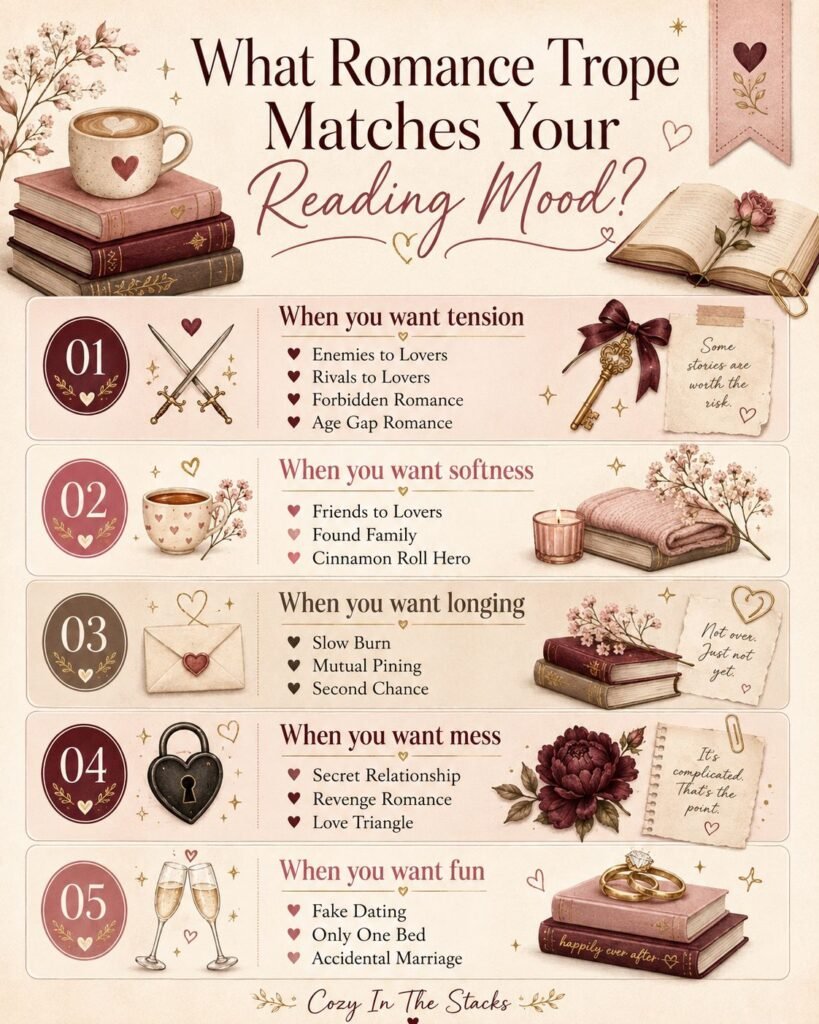
When You Want Tension and Banter
Try:
- Enemies to lovers
- Rivals to lovers
- Workplace rivals
- Grumpy and sunshine
- Forbidden romance
These are ideal for days when you want every conversation to feel like verbal sparring with suspiciously intense eye contact.
When You Want Softness and Comfort
Try:
- Friends to lovers
- Cinnamon roll hero
- Found family
- Cozy romance
- Small-town romance
- Established relationship
These tropes offer warmth, care, and characters who may actually remember to feed each other.
When You Want Longing
Try:
- Slow burn
- Mutual pining
- Second chance
- Childhood friends to lovers
- Marriage in trouble
- He falls first
Please prepare yourself for glances, sighs, old memories, and at least one moment where a character almost confesses everything before being interrupted.
When You Want Mess
Try:
- Secret relationship
- Revenge romance
- Love triangle
- Surprise pregnancy
- Secret baby
- Lovers to enemies to lovers
You did not come for peace.
You came to watch people make emotionally complicated decisions from the safety of your reading chair.
I respect it.
When You Want Something Fun
Try:
- Fake dating
- Only one bed
- Accidental marriage
- Vacation romance
- Neighbors to lovers
- Roommates to lovers
These tropes often create playful situations, awkward intimacy, and characters who keep insisting nothing is happening while everything is clearly happening.
Romance Tropes in Black Romance
Black romance can include every trope on this list.
Black characters can be grumpy and sunshine.
They can fake date, fall for their childhood friends, marry for convenience, reconnect with first loves, or spend 300 pages refusing to admit they are obsessed with each other.
Black romance can also explore cultural connection, family expectations, career ambition, community, healing, vulnerability, generational goals, and Black joy.
Not every Black romance story centers struggle or trauma.
Sometimes the characters are simply allowed to fall in love.
They can be soft.
They can be messy.
They can be successful, complicated, funny, guarded, dramatic, and deeply adored.
That range is part of what makes exploring Black romance so rewarding. There is no single Black love story because there is no single Black experience.
How to Use This Romance Tropes List to Build Your TBR

Now that we have examined all these opportunities for fictional emotional confusion, let us put the list to work.
Start by choosing three tropes you already love.
Then choose one trope you have never tried.
Decide how much angst and spice you want.
Choose one full-length book, one novella, and one audiobook.
As you read, pay attention to the combinations you enjoy most.
Maybe you do not simply love friends to lovers. Maybe you specifically love childhood friends to lovers with a MMC who falls first.
That is useful information.
Extremely specific, but useful.
You can also keep a simple trope tracker in your reading journal. Note the main trope, supporting tropes, spice level, emotional tone, and whether you would read that combination again.
Soon, your reading habits will become very clear.
You may discover that you are adventurous and enjoy a wide range of stories.
You may discover that you have read fake dating fourteen times.
Self-awareness is a gift.
Frequently Asked Questions About Romance Tropes
What are the most popular romance tropes?
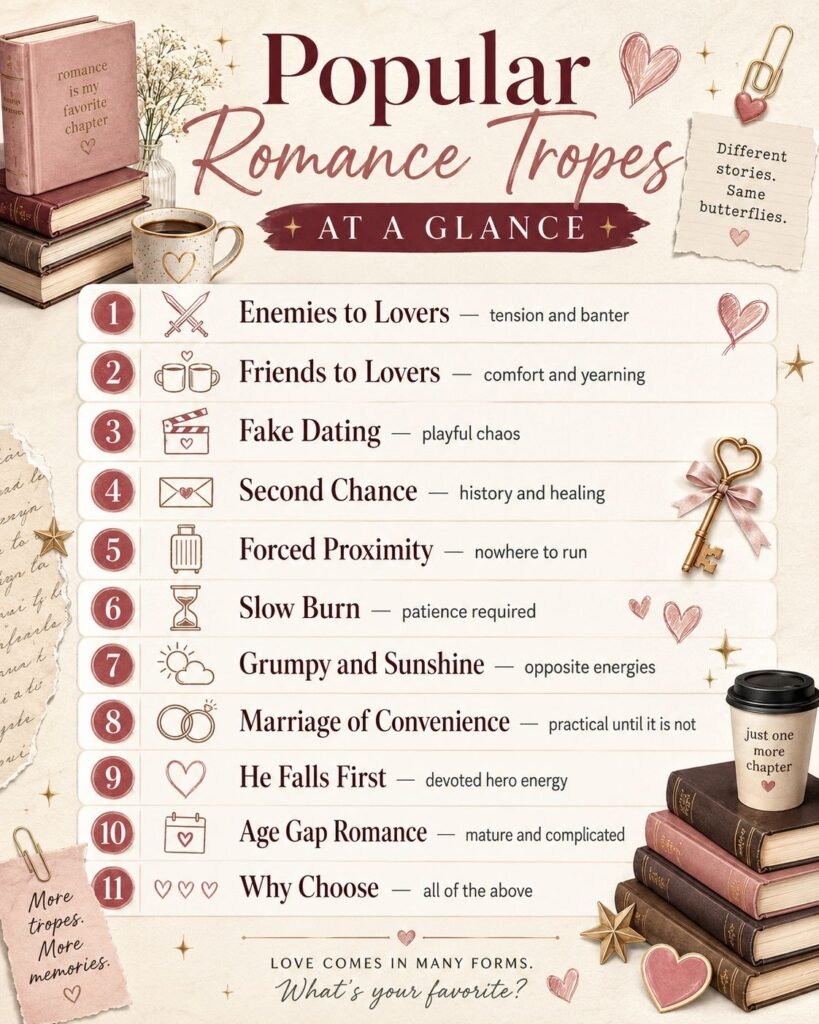
Some of the most popular romance tropes include enemies to lovers, friends to lovers, fake dating, second chance, forced proximity, slow burn, grumpy/sunshine, and marriage of convenience.
Popularity changes over time, but these setups continue to appear across many romance subgenres.
What is the difference between a trope and a theme?
A trope is a recognizable story setup or relationship dynamic.
A theme is a larger idea explored through the story.
For example, second chance is a trope. Forgiveness may be one of the story’s themes.
Can a romance book have multiple tropes?
Yes. Most romance books contain several tropes.
A book could be a small-town, second-chance romance with forced proximity and age gap.
Authors enjoy layering the emotional problems.
Does the trope tell me how spicy the book is?
No.
The same trope can appear in closed-door, moderately spicy, or highly explicit romance books.
Check the book description, content notes, and trusted reader reviews when you want a particular spice level.
What is the best romance trope for beginners?
Friends to lovers, fake dating, second chance, and grumpy/sunshine are approachable places to start.
The best trope depends on whether you prefer comfort, tension, humor, or emotional drama.
Is “he falls first” a romance trope?
Yes. It describes a relationship dynamic in which the MMC recognizes or expresses his feelings first.
“He falls first and harder” is a more intense variation featuring a MMC who becomes deeply devoted while the FMC is still deciding what is happening.
We love to see it.
What is a romance microtrope?
A microtrope is a smaller recurring moment or detail that appears within a larger romance story.
Popular microtropes include:
- “Who did this to you?”
- Caring for someone while they are sick
- Saving someone a seat
- Lending them clothing
- Remembering their favorite order
- Using a special nickname
- Fixing something around their home
- Touching the small of their back
- Saying “Come here” during an emotional moment
Microtropes are tiny, but they can have readers closing the book, staring at the ceiling, and whispering, “That was everything.”
Your Favorite Romance Trope Is the One That Keeps You Reading
There is no correct romance trope to love.
You may enjoy the emotional comfort of friends to lovers, the tension of enemies to lovers, the chaos of fake dating, or the long, painful journey of a slow burn.
You may want a cinnamon roll MMC who communicates.
You may want a morally gray protector who frightens everyone except the FMC.
You may want one romantic interest.
You may ask why choose.
Your reading mood can change, too. The trope that feels perfect today may not be what you want next month.
That is the beauty of romance.
There is always another version of love waiting in the stacks.
So tell me, bestie: Which romance trope will make you add a book to your TBR almost every single time?
Explore more Black romance and urban fiction recommendations inside The Reading Lounge, and save this romance tropes list for the next time you are staring at your Kindle like it personally failed to choose a book for you.